


Scenedesmus quadricauda Z-1
Chlorophyta › Chlorococcophyceae › Protococcales › Scenedesmaceae › Scenedesmus
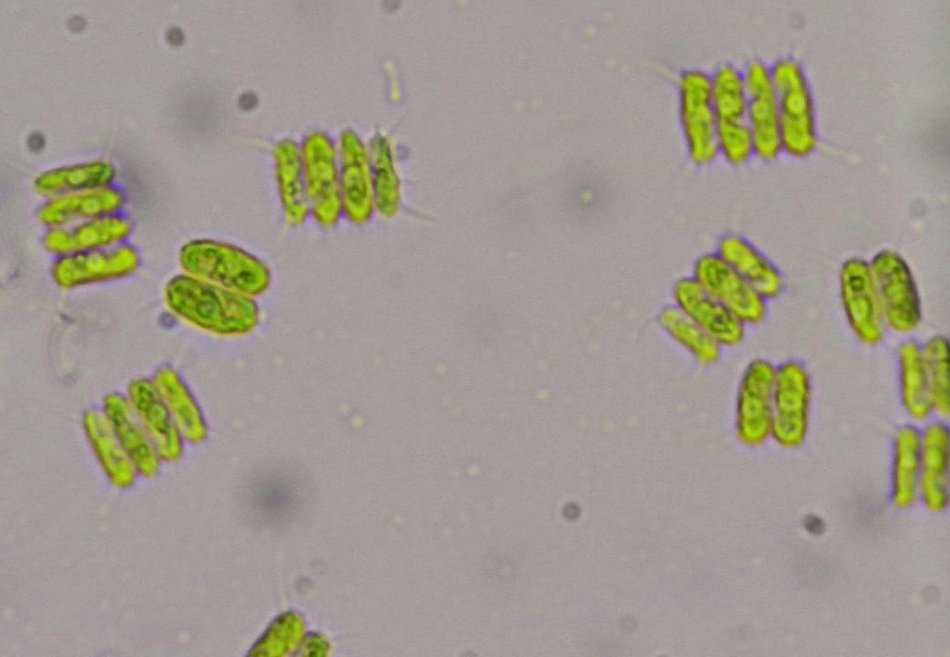
Description
History of Receipt and Isolation
- Country of origin: Uzbekistan
- Place of isolation: provided by the Collection of the Institute of Botany, Academy of Sciences of Uzbekistan
- Last identification: Zayadan B.K., Akmukhanova N.R. in the biotechnology laboratory of Al-Farabi KazNU, 2017
- Year of accession to the collection: 2015
- Method of obtainment: collection strain
- Genetic features: Wild type
- Culture condition: axenic
Morphology and Structure
coenobia are arranged in a single row and consist of 2, 4, or 8 cells, rarely 16 cells. Cells are oval-cylindrical or elongated-oval; marginal cells bear spine-like projections at their ends. The cell wall is smooth. The chloroplast is peripheral and contains a single pyrenoid. Cells are approximately 7–15 µm long and 2.7–5.8 µm wide.
Cultivation
- Culture medium: Gromov medium No. 6, BG-11.
- Temperature: 26–28 °C
- Light intensity: 40–70 µmol photons/m²/s
- Light regime: 16:8 h (light/dark)
- pH: 6.5
Physiological Characteristics
Photoautotroph, mesophile, neutrophile, oligohalobe, and producer of valuable secondary metabolites and antioxidants. Under optimal cultivation conditions for biomass production (continuous CO₂ supply), on days 7–8, the content of substances in 1.5–2.0 g/L of dry biomass is as follows: proteins – 48–50%, carbohydrates – 40–45%.
Long-term Preservation Conditions
The culture is maintained on liquid and 1.5–2.0% agar-solidified Tamiya mineral medium. The storage temperature is 10–12 °C, light intensity is 10–20 µmol photons/m²/s, with a 12:12 h light/dark photoperiod. The culture is subcultured as required, but at least once every 2–4 months.
Field of Application
It can be used in biotesting as a test object for toxicity assessment, followed by bioremediation, bioenergy, and pharmacology.