


Chlamydomonas reinhardtii CC-124 cbn-2
Chlorophyta › Chlorophyceae › Chlamydomonadales › Chlamydomonadaceae › Chlamydomonas
Description
History of Receipt and Isolation
- Country of origin: USA (parental strain, wild-type strain from the Chlamydomonas Resource Center, Duke University); Kazakhstan (obtainment of the mutant strain)
- Place of isolation: at the Biotechnology Laboratory of Al-Farabi Kazakh National University
- Habitat: -
- Isolator(s): Zayadan B.K., Akhmetova G.A., Askar A., Sanatov S.S.
- Year of accession to the collection: 2024
- Method of obtainment: induced UV mutagenesis of the collection strain Chlamydomonas reinhardtii CC-124
- Genetic features: mutant with light-green pigment
- Culture condition: axenic
Morphology and Structure
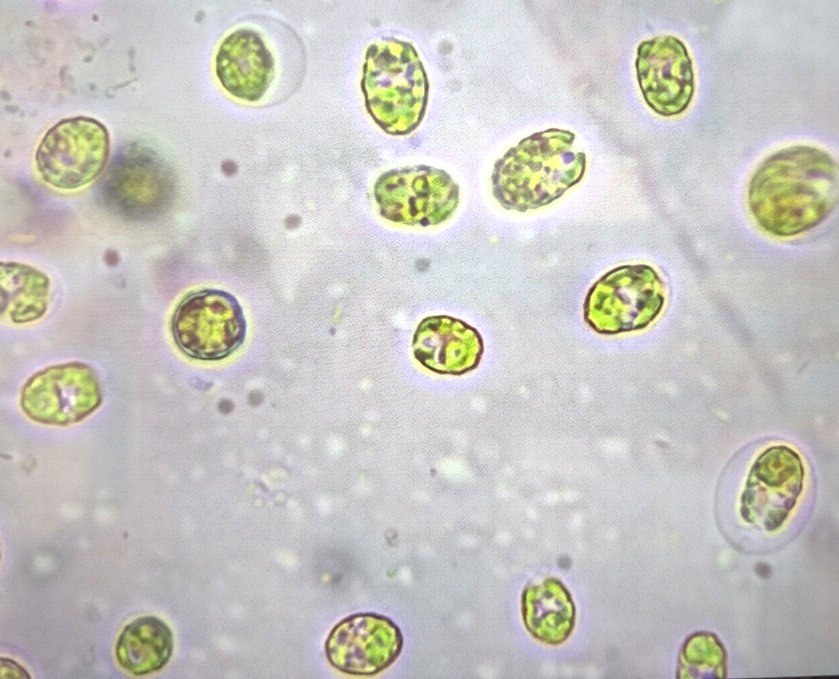
unicellular, motile green microalga, light green to green in color, characterized by a symmetric, globose to wide-ovoid shape, with diameters ranging from 6 to 15 µm and a well-defined external cell wall. The intracellular area contains a large, cup-shaped chloroplast with a granulate stroma and a visible pyrenoid zone. These cells may be found individually or in clusters, embedded in a mucilaginous matrix, with flagella either retracted or hidden within the matrix.
Cultivation
- Nutrient Medium: TAP medium (liquid and agarized)
- Temperature: 24–28 °C
- Light Intensity: 20–30 µmol photons/m²/s
- Photoperiod: 16:8 h (light/dark)
- pH: 7.0–7.2
Physiological Characteristics
Mesophile; aerobic phototroph under standard cultivation conditions; capable of photoautotrophic and mixotrophic growth; pigment mutant
Long-term Preservation Conditions
maintained on liquid and 1.5–2.0% agarized TAP medium. Storage temperature 10–14 °C under low light intensity of 5–10 µmol photons/m²/s. Subculturing is carried out every 3 months.
Genetic Information
Molecular identification of the strain was based on sequence analysis of the ITS region of ribosomal DNA. GenBank Accession № PZ671027
Field of Application
intended for fundamental and applied research in the fields of physiology and genetics of microalgae, molecular biology, biotechnology, selection, mutagenesis, bioremediation and biotesting, as well as for studying the physiological and biochemical characteristics of microalgae.